














Historic delta camp with personalised guiding across land and water.
Location
Duke’s Camp sits on Chief’s Island in the Moremi Game Reserve, a core wilderness area within the Okavango Delta, Botswana. Set on the banks of the Khwai River amid sweeping floodplains, ebony forests and grassy channels, the camp’s location gives you direct access to the region’s remarkable biodiversity, from predators stalking plains game to abundant birdlife around waterways. This classic delta setting feels remote yet alive, with wildlife roaming freely through the waterways and woodlands surrounding camp.
Rooms
Accommodation comprises 12 classic canvas tents raised on timber platforms beneath tall trees, each with en-suite bathrooms, indoor bathing areas and private verandas overlooking the floodplain. Tents blend traditional safari style with thoughtful comfort, offering peaceful places to relax after a day’s activities, with uninterrupted views and a sense of being immersed in the delta’s rhythms.
Facilities
Duke’s Camp’s communal areas are informal and welcoming, with open-air dining and lounge spaces shaded by canvas and forest canopy. A swimming pool with decking provides refreshing views across the floodplain, and firepit evenings under the stars are a highlight of the social rhythm. Practical touches such as Wi-Fi in the main area and laundry service ensure a comfortable stay that doesn’t detract from the remote bush aesthetic.
Activities
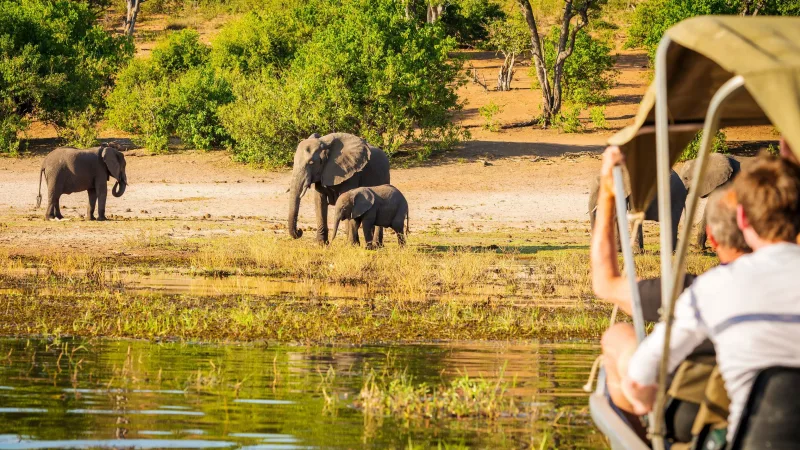
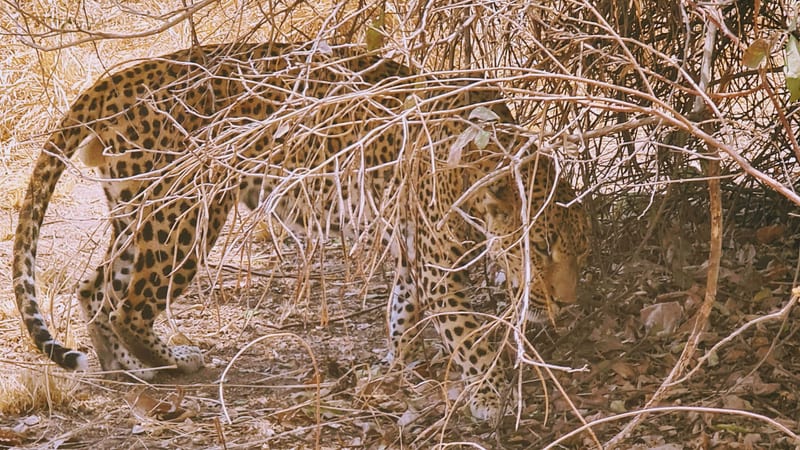
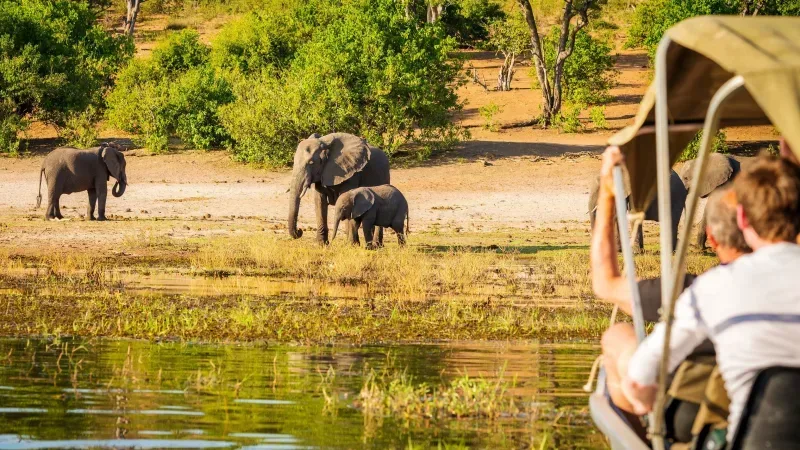
The location on Chief’s Island makes Duke’s Camp a superb base for both land and water safaris. Experienced guides lead morning and afternoon game drives across delta grasslands and riverine forests in search of lion, elephant and buffalo. Water-based activities vary with seasonal flood levels, offering mokoro excursions, boating safaris and fishing in more open channels, while walking safaris and birdwatching let you explore smaller delta life at a slower pace. Photography opportunities are consistently excellent.
Sustainability
Duke’s Camp operates with a solar power system to reduce its environmental footprint within the delicate Okavango Delta ecosystem. As part of Natural Selection’s wider sustainability approach, the camp supports programmes such as CLAWS (Communities Living Among Wildlife Sustainability), which uses collaring and monitoring to help reduce human–lion conflict, and the Elephant Express, which safely transports schoolchildren and villagers through elephant corridors to reduce risky interactions. By integrating low-impact operations with support for community-oriented conservation, a stay here contributes to both biodiversity protection and local wellbeing in one of Africa’s most iconic wilderness regions.
Let me plan your trip
Best places to stay in Moremi Game Reserve
Moremi Game Reserve Trip Inspiration
When to visit Botswana
Find out the best time to visit Botswana with our month by month guide.
- Best
- Good
- Mixed
- Jan
- Jan
- Feb
- Mar
- Apr
- May
- Jun
- Jul
- Aug
- Sep
- Oct
- Nov
- Dec
January
January is the heart of the wet season, with heavy downpours usually in the late afternoons, which is a great excuse to watch the storm from the luxury of your camp or lodge. Much of the wildlife is still there it may just take a little longer to find as its more dispersed due to the surrounding surface water. This time of year is hot, and aside from the rainshowers it's sunny. This is the best time to see the Zebra and Wildebeest migration as well as large flocks of flamingos down in the Makgadikgadi Salt Pans. Rates are lower during the wet season.
January
January is the heart of the wet season, with heavy downpours usually in the late afternoons, which is a great excuse to watch the storm from the luxury of your camp or lodge. Much of the wildlife is still there it may just take a little longer to find as its more dispersed due to the surrounding surface water. This time of year is hot, and aside from the rainshowers it's sunny. This is the best time to see the Zebra and Wildebeest migration as well as large flocks of flamingos down in the Makgadikgadi Salt Pans. Rates are lower during the wet season.
February
February is also one of the warmer months, and is defined by both sunshine and heavy storms, which making it another great time for photography. It's now that the Central Kalahari begins waking up, with herds of game coming to graze the lush grassland. Again the peak migration should be in the Makgadikgadi now with large herds of wildebeest and zebra in the area. Game viewing is still great in many areas of the Okavango Delta with many of the dried camps on the western side top choice.
March
The wet season slowly comes to an end, leaving hot, drier days. There is still some rain, but only for short periods during the afternoon. Enjoy the green scenery and the lower accommodation rates. Towards the end of March the wildlife in the Central Kalahari really begins to pick up as large numbers of plains game head in the pans and Valleys. This is a great time of year to combine the Central Kalahari and Okavango Delta.
April
April is a fine month to visit Botswana, as the nights become cooler and sleeping is easier. Breeding season is underway for plains game, so keep an eye out for the clashing males attempting to woo the females out on the savannahs. Along with the breeding season comes more predator activity as the young animals are easy pickings. This is peak game viewing time in the Central Kalahari Game Reserve making it an integral part of any itinerary.
May
With the rainy season at an end, the temperature falls, making bush excursions more pleasant. Nights can be a little chilly, so you'll probably need an extra layer if you're heading out on an evening game drive. Skies become clearer and there are fewer mosquitoes. This is one of our favourite months to travel and also marks the final month before the peak season rates kick in in most camps.
June
June is the middle of winter in Botswana, and is one of the best times to visit the country. Days are pleasantly warm, and nights are spent tucked up cosily in your camp or lodge. Wildlife becomes concentrated around waterholes making it easier to spot. This is a great time to visit the Okavango Delta, Moremi and Chobe.
July
With warm sunny days, and cool nights, July is the perfect time to be in Botswana. Although this is the dry season, it's a great time to enjoy a traditional mokoro canoe trip as floodwaters begin to rise in the Okavango Delta, flowing down from the highlands of Angola.
August
The temperature begins to rise again in August, but it's still a superb time for game viewing, and the Makgadikgadi Pans are now accessible through until October. Water is now scarce in many of the parks, making game viewing easy. It's a good time to visit Savute and Linyanti.
September
Days in September are hot with sunny blue skies, and the nights are no longer cold. It does get quite dusty out in the bush thanks to many months without rain, and game viewing is excellent as predators and prey alike hunt to find water.
October
October is warmer, and safari activities take place during early mornings and late afternoons to avoid the worst of the heat. This is one of the final month before the rains come and the ground is at its driest making for exceptional game viewing. If you don’t mind hot days this is one of the peak game viewing months
November
November remains hot, but the rains return mid-month, bringing the plains and forests back to life. If you want to see young animals being born and lots of predator action, this is the month to come. With rates dropping in November and the rains often falling later on in the month, the first 2 weeks of November are a very popular time to travel. It also ties in nicely with the great weather in Cape Town and the Garden Route.
December
The rainy season is now in full swing with often short heavy downpours in the evening, days are still mostly sunny. Landscapes are lush, and there is plenty of wildlife activity as the newborns flourish.
Speak to a Botswana expert today
and start planning your tailor-made holiday

Alistair