













Trips in Angola
Angola Trip Inspiration
Speak to a Angola expert today
and start planning your tailor-made holiday

Alistair
Angola Expert
Looking for more information?


Angola is one of Africa’s most surprising travel experiences. Its landscapes move from waterfalls and highland escarpments to desert roads, Atlantic beaches and remote parks. The appeal is not built around one famous sight or landmark, but around the variety of the journey itself. One day might be spent near the spray of Kalandula Falls, another could take you through the mountains of Huíla, along the Atlantic coast, or towards the desert wilderness of Iona. This is not a typical safari destination, and that is part of what makes an Angola Holiday special.
Angola suits travellers who want space, culture and a stronger sense of untouched landscapes, rather than a route that feels overly familiar. With the right planning, a safari here can bring together wildlife, coastlines, highlands, history and culture all into one journey. It is a country that still feels under-explored, offering a side of Africa that many have never experienced.

Part of Angola’s appeal is the sense of space around you. In many places, the landscapes still feel lightly touched by tourism, and local culture remains closely tied to place, tradition and the land. There is a quietness to travelling here that is hard to find in more established safari destinations.
It works for adventurous people who want to chase the feeling of open space, rare encounters and places that still feel largely undiscovered. This is not exclusivity in the polished, luxury sense. It is the feeling of standing in the wilderness with very little human disturbance around you. That sense of being somewhere few others have been one of Angola’s strongest reasons to visit.

Kalandula Falls is one of the strongest reasons to visit Angola. Set in Malanje Province, the falls are wide, powerful and still far less travelled than many of Africa’s better-known waterfall sites. The Lucala River drops more than 100 metres here, creating one of the largest waterfall experiences in Africa.
What makes Kalandula Falls so special is its size. The water does not fall into one narrow stream, it spreads wide across the rock, forming a huge curtain that seems to wrap around the landscape. As you get closer, the sound builds until it becomes part of the place itself.
It is this feeling that makes Kalandula such a strong reason to visit Angola. It gives the journey a powerful highlight, especially when combined with rock formations and history of Pungo Andongo. They make Malanje one of the most rewarding regions to travel to in Angola.

Pungo Andongo brings a different kind of feeling to a journey through Angola. After the scale and movement of Kalandula Falls, this is a quieter experience, shaped by the giant black monolith formations erupting from the savannah. At first, it’s the landscape that stands out, but the longer you spend there, the more the history of the place begins to reveal.
The rocks are linked to the old kingdom of Ndongo, one of the most prevalent pre-colonial Kingdoms in Angola’s history, some footprints left around the rocks are said to belong to Queen Nzinga of Ndongo, famous for her defence against Portuguese colonisers. That connection gives Pungo Andongo more depth than a simple scenic stop.
This works for people who enjoy places of natural beauty but also have a story behind them. The combination of rust-red and burnt-orange earth, the kind of iron-rich soil that seems to bleach everything it touches to narrow tracks that cut through thick course savannah grass. Beyond them, dense bush gathers at the base of monoliths, making the rocks feel even larger as they rise out the landscape. This is the type of place that fills the memory with colour, silence and stone long after you have left it behind.

Further south, Angola begins to rise into the highlands of Huíla. The roads climb towards the cooler air, wider views and a landscape shaped by cliffs, valleys and open plateaus.
Around Lubango, the land becomes more dramatic. Tundavala opens suddenly at the edge of the Huíla Plateau, with the lowlands dropping away beneath it, while Serra da Leba is known for its winding road cut into the escarpment. These are places where the scale of Angola becomes easier to understand, not through one single viewpoint, but through the roads, drops and long horizons that unfold as you travel.
Huíla also gives the journey more variety. It links the inland landscapes of Angola with the country’s southern cultures and desert regions, making it an important part of the wider safari route. After the force of Kalandula and the stillness of Pungo Andongo, the highlands bring altitude, movement and raw sense of scale.

From the highlands of Huila, continue further southwest towards Iona National Park, where Angola begins to merge with the Namib Desert. The landscape opens into dry plains, sand, rocky hills and long desert horizons with the Atlantic sitting beyond it all. It’s a very different side of Angola, harsher, quieter, and more remote.
Iona’s beauty stems from this meeting of extremes. The northern tip of the Namib Desert, with its red dunes that glow in the sun and rocky outcrops that cast shadows, a shipwrecked coast and the ancient Welwitschia Mirabilis plants, endemic to the Namib Desert. Together with Namibia’s Skeleton Coast National Park and the Namib Partial Reserve, it forms one of the largest transfrontier conservation areas in the world.
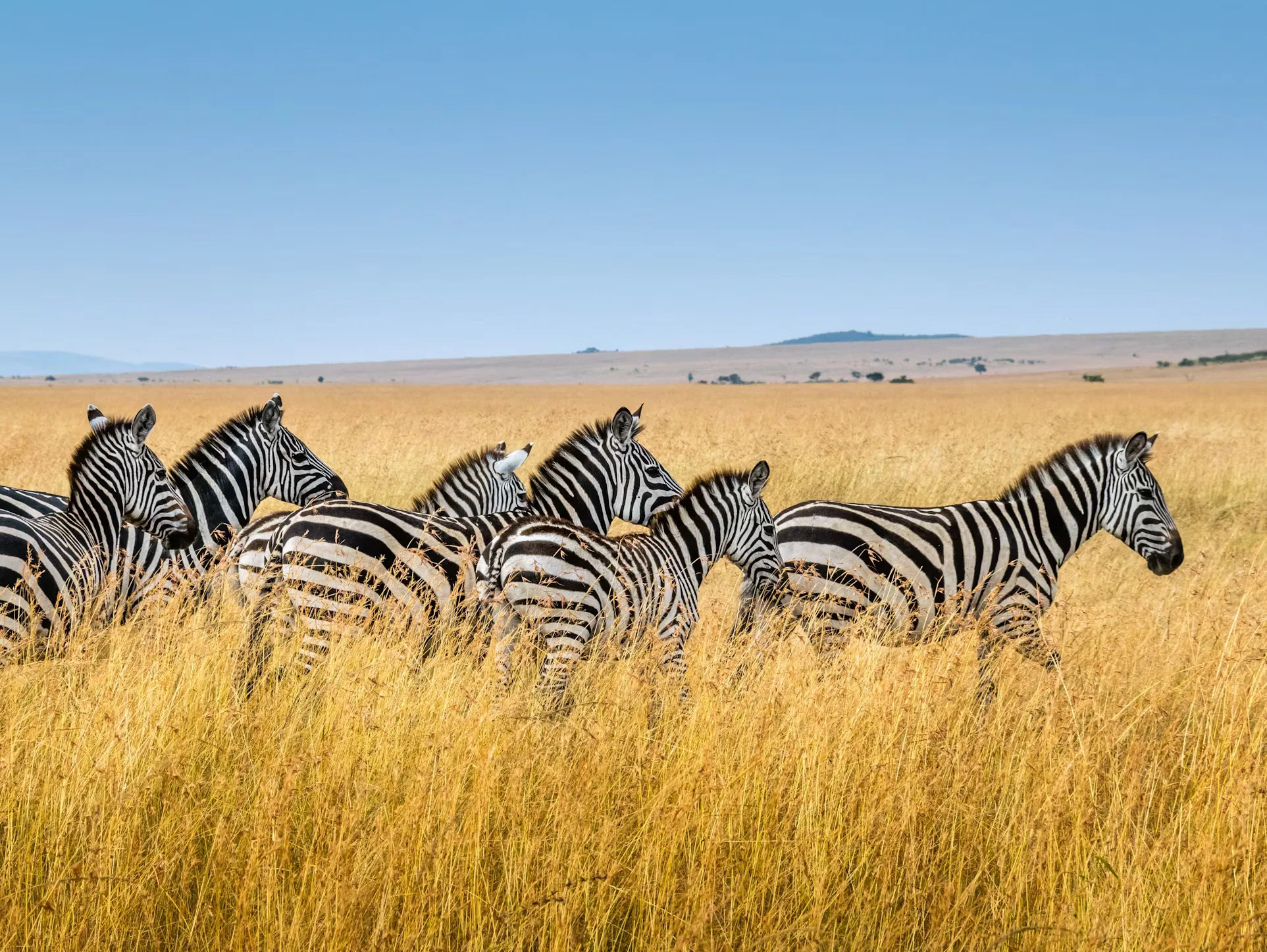
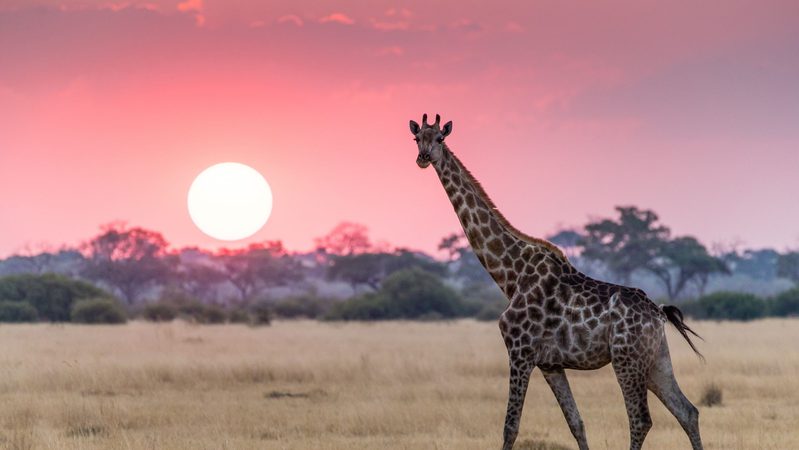
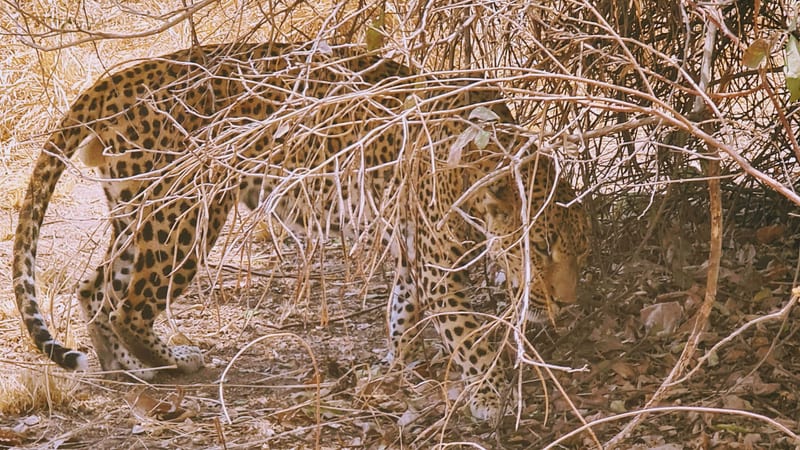
Wildlife in Iona is a recovery story. This is not a place of dense game viewing, but of desert-adapted animals moving through a harsh and open landscape. Oryx, springbok and Hartman’s mountain zebra strongly associated with Namibia and southern Angola, still survive here, shaped by the dry plains and scattered grazing, while cheetah, leopard and brown hyena remain present in the area. The return of the Angolan giraffe reintroduced in 2023 and 2024, has become one of the parks most important conservation milestones.
This is not a safari of crowded sightings or polished routes. Iona is about distance, desert and the slow return of wildlife. Its power lies in the scale of the place, heat rising off the plains, wind moving across the sand, and a wilderness still being restored.

Kissama National Park brings Angola’s wildlife story close to Luanda. South of the capital, the landscape opens into savannah, riverine country and stretches of thicker vegetation. It is one of the easiest places to include a safari element in an Angola journey.
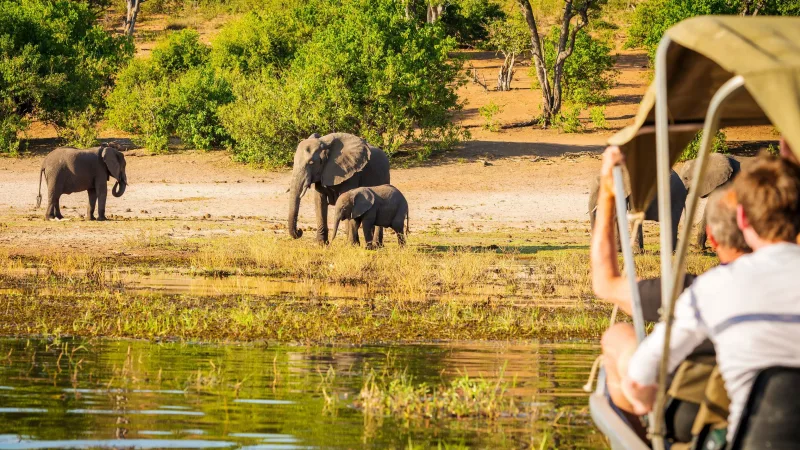
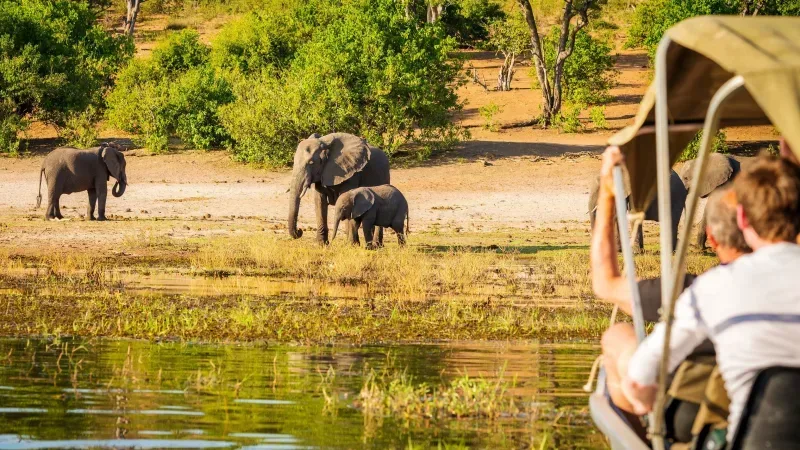
The animals here live in a softer, greener world compared with the desert wilderness of Iona. Elephants move through the thick bush, giraffes browse from the trees, and zebra and antelope are found in the more open country. Along the river, the pace changes again. Crocodiles rest on the banks, hippos stay partly submerged in the water, and birdlife brings colour, movement and sound to the channels and river edges.
Kissama brings balance to Angola’s safari story. After the exposed desert, highlands and long open roads of the south, it offers a greener wilderness of savannah, miombo woodland, riverine forest and baobab-acacia country. It shows that Angola’s wild places are not all the same, but shift constantly as you move through the country.

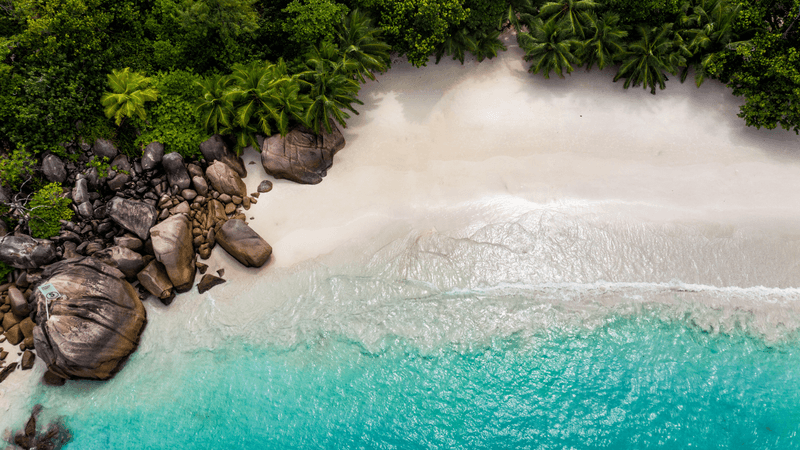
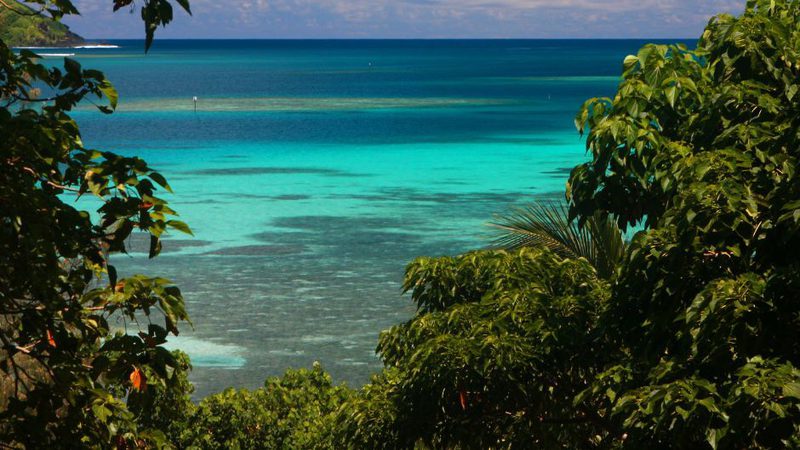
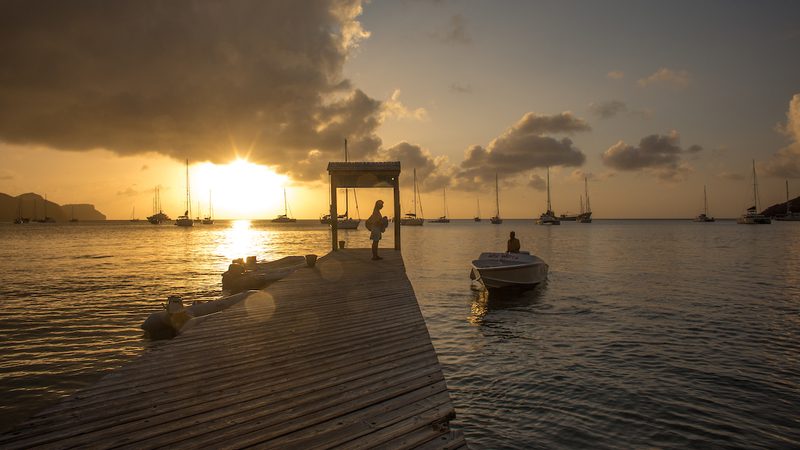
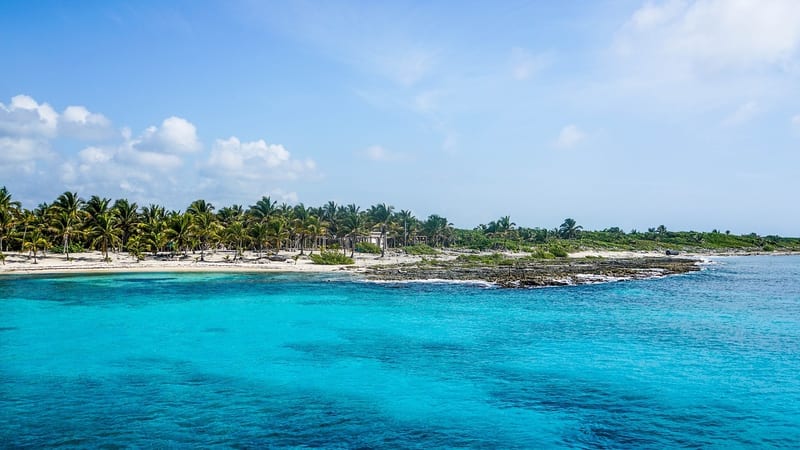
After Angola’s waterfalls, highlands, and desert parks, the Atlantic coast gives the journey a completely different rhythm. It is not one single beach experience, but a long edge of changing landscapes, calm lagoon water, surfing beaches further south, fishing villages, coastal roads, seafood stops, and eventually, the strange meeting point between the desert and sea.
Close to Luanda, Mussulo a peninsula 30 km long brings the softer side of the coast. It is reached by boat and works well for a slower day by the water, with calm lagoon areas, beach restaurants, fresh fish, boat trips and more active options such as quad biking or jet skiing. It is the kind of place that gives the journey a pause without taking you far from the capital.
Cabo Ledo feels more open and exposed. Around two hours south of Luanda, it is known for surfing, wide sand and Atlantic waves rolling into the beach. Activities are simple, surfing, paddle boarding, beach walks, photography, and fresh Angolan food by the water.
Further south, the coastline becomes even more unusual. Around Benguela, Lobito and Namibe, the beaches feel quieter and more remote, with calmer Atlantic waters in place and a stronger sense of distance from Luanda. This is a place that makes Angola’s coast more abstract, dry land, pale sand and desert dunes pressing up against the deep blue of the ocean. Near the Namib Desert, the contrast becomes even sharper, with waves of sand and waves of sea almost meeting each other.
This is what makes Angola’s coast such a strong part of the journey. It is not just somewhere to relax. It adds movement, contrast and atmosphere to the safari.

After the quieter landscapes of Angola, Luanda brings colour, culture, dance and music. The capital has a fast, coastal energy, shaped by music, history, restaurants, markets, traffic and people who give the city warmth. It is busy and sometimes chaotic, but that’s the part that makes it interesting.
Luanda is where Angola’s different layers are easiest to see. Portuguese influence sits alongside modern African city life, while old forts and colonial buildings hint at the country’s complex past. At the same time, the city feels forward-looking, with music, dance and food at the centre of daily life. Semba and kizomba are two of Angola’s most important musical traditions, semba is faster and more playful, while kizomba is slower, smoother and more intimate. Together with grilled meats, fresh fish, local ingredients and Portuguese flavours, they give Luanda much of its character.
This is the fast-paced side of an Angola journey. Evenings can be spent by the water, eating seafood, listening to music or simply watching the city move around you. Luanda gives the trip personality before the route moves back outwards towards the coast, highlands, desert or national parks. It reminds you that Angola is not only about landscapes, but also about people, culture, and rhythm of the country.

Just south of Luanda, Miradouro da Lua gives the journey one of its first truly unusual landscapes. The name means “Viewpoint of the Moon”, a reference to the way the cliffs resemble a lunar surface, with deep ravines, sharp ridges and reddish earth. It sits around 40km south of Luanda, on the route towards Barra do Cuanza and Cabo Ledo, which makes it an easy stop as the journey begins to move away from the capital.
The landscape has been shaped over thousands, possibly millions of years by wind and rain erosion. Softer layers of sedimentary rock have gradually worn away, leaving behind cliffs, gullies, columns and folded ridges of earth. From above, the formations drop away in layers, with different colours running through the rock, pale clay, orange, red and brown. It is not a mountain view or a beach view, but something stranger. A carved stretch of land that looks like it has been pulled apart slowly by time.
What makes it stand out is how quickly the city seems to disappear. One moment you are close to Luanda’s coast and traffic, and the next you are looking over a dry, carved landscape that feels almost separate from everything around it. The formations look fragile in places, as if the land has been slowly worn down by wind, rain and time.

As the journey moves south through Huíla and towards Cunene, Angola becomes more than a route of landscapes. The highlands, dry plains and pastoral country are home to communities whose lives are closely tied to cattle, water, movement and the land. This gives the southern part of the country a depth beyond coastlines, waterfalls and desert.
Among the most recognisable tribes are Himba and Herero-related groups, along with other pastoralist communities across the south. Dress, hairstyles, jewellery and body adornment are part of cultural identity, shaped by age, status, tradition and daily life in a harsh environment. Cattle are also central, not only for livelihood, but as a marker of wealth, family and connection to ancestry, similar to that of the Masai and Samburu in Kenya.
This part of Angola needs to be approached with care. The value is not in treating communities as attractions, but in understanding how culture and landscape sit together. With the right local guides, even simple encounters can add a powerful human layer to the journey.
The Southern Angolan tribes resemble a lost civilisation, still very undiscovered today and little effect from outside influence.
For those drawn to open landscapes, culture, wildlife and places that still feel largely undiscovered, Angola offers a very different kind of safari. It may not follow the familiar routes, but that is where much of its strength lies. Travel here is still specialist, so the right guidance makes all the difference, from knowing which regions to combine to understanding how to move between them smoothly. To start shaping your own Angola journey, speak to one of our Africa Specialists, who can help bring together the country’s waterfalls, highlands, coast, wildlife and remote wilderness into a safari that feels truly personal.
and start planning your tailor-made holiday
Angola Expert