
















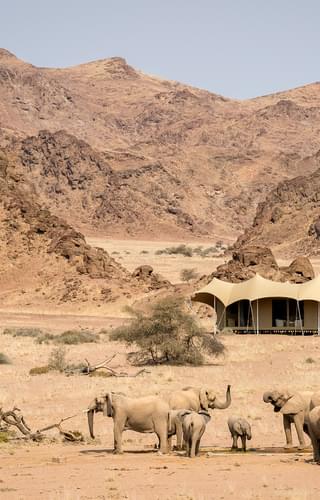
The ideal base for seeing unique desert wildlife as well as exploring the foreboding Skeleton Coast
Location: Deep in Namibia’s remote Kaokoveld, Hoanib Skeleton Coast Camp overlooks the dry Hoanib River, surrounded by rugged mountains, gravel plains and rolling dunes. Its secluded position provides access to the dramatic Skeleton Coast, where desert landscapes meet the Atlantic Ocean and thriving wildlife survives in an extraordinarily harsh environment.
Rooms: The camp has eight spacious en-suite tented suites, including one family unit, each designed to blend contemporary comfort with the surrounding desert. Large glass panels frame the landscape, while subtle natural tones and light woods reflect the colours of the wilderness. The open-plan design creates an immersive connection with the environment.
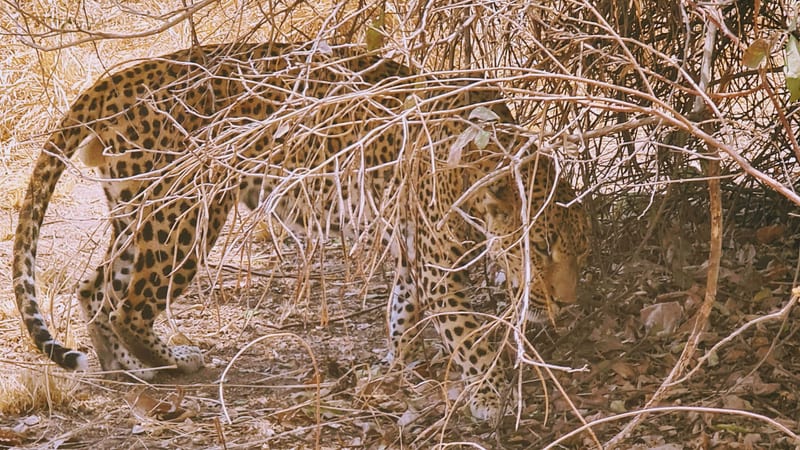
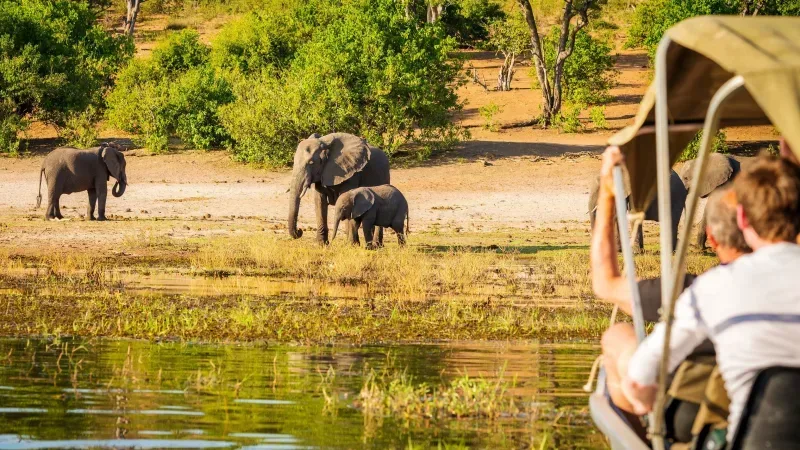
Activities: Explore the extraordinary desert wilderness on guided nature drives, with opportunities to see desert-adapted elephant, lion, giraffe, oryx and brown hyena. Coastal excursions reveal the dramatic Skeleton Coast and its seal colonies, while guided walks, wildlife research experiences and stargazing offer different perspectives on this remarkable landscape.
Amenities: Hoanib Skeleton Coast Camp keeps amenities understated yet comfortable, with a refreshing swimming pool overlooking the surrounding wilderness, Wi-Fi and inviting communal spaces for relaxing between adventures. Guests can also enjoy the camp’s research centre, offering fascinating insight into desert-adapted wildlife, alongside atmospheric dining and fireside evenings beneath Namibia’s spectacular night skies.
Sustainability: Hoanib Skeleton Coast Camp is entirely solar-powered and operates within the Palmwag Concession, a joint venture involving Wilderness and the Anabeb, Torra and Sesfontein conservancies. The camp supports local communities and conservation, including research into desert-adapted wildlife and initiatives protecting the fragile ecosystem and its remarkable species.

Let one of our experts help your craft an unforgettable experience
Best places to stay in Skeleton Coast
Skeleton Coast Trip Inspiration
When to visit Namibia
Find out the best time to visit Namibia with our month by month guide.
- Best
- Good
- Mixed
- Jan
- Feb
- Mar
- Apr
- May
- Jun
- Jul
- Aug
- Sep
- Oct
- Nov
- Dec
January
Bring your umbrella, it's rainy season. January is mid-summer in Namibia with the possibility of torrential downpours mid afternoon, but with temperatures of 30-35 degrees it tends to be hot and humid.
February
Similar to January, it is hot and humid with the chance of a downpour in the afternoon.
March
In March, rainfall starts to decrease and temperatures lower with nights becoming increasingly cool. Although daytime temperatures remain hot reaching up to 30 degrees.
April
April is predominantly dry and hot, although there can be a couple of sporadic rainy days across the month.
May
Winter is coming. May has little or no rainfall and the humidity is low, in northern regions around Etosha you'll find fresher, greener landscapes with wildlife gathering around depleting watering holes.
- If you're looking to tackle the Fish River Canyon Hike this is the best time to visit Namibia.
June
In June the nights are cold and temperatures can drop below 10 degrees, whilst in the Namib desert it can reach below freezing. There is no chance of rain as the dry season is in full flow.
July
Visitors in July will experience one of Namibia's coldest months, be sure to pack warm clothing as game drives can be chilly.
August
Like July, visitors in August will experience one of Namibia's coldest months, be sure to pack warm clothing as game drives can be chilly and night time temperatures can drop below freezing both at the coast and inland.
September
Considered the best month to travel to Namibia, September is temperate with clear dry skies and low humidity levels.
October
In October game viewing is at its best, the vegetation is fading with temperatures rising up to 29 degrees.
November
Heat continues to rise, with humidity levels remaining low, however there is a chance of rain in the afternoons.
December
December brings the first rains of the season, bringing everything to life as animals start to disperse as more water becomes available.
Speak to a Namibia expert today
and start planning your tailor-made holiday

Alistair

Ruth